7 Best Tecar Therapy Machines Does Tecar Therapy Hurt?
Tecar therapy is often described as a warming treatment, but the sensation depends on the device, settings, treatment area, and individual sensitivity. During a session, a therapist moves an applicator over the skin, often using gel or cream. You may notice gentle warmth or pressure. It should not feel sharply painful or uncomfortably hot.
So, does tecar therapy hurt during physical rehab? Usually, people report warmth rather than pain, though responses vary. A clinician should check your comfort and adjust the intensity. Speak up if you feel burning, stinging, or worsening pain. Small detail, but important: feeling more heat does not automatically mean better treatment.
Evidence deserves a careful look. Peer-reviewed reviews of capacitive-resistive electric transfer therapy report possible benefits for some musculoskeletal conditions, but study methods and treatment protocols vary. That makes firm, universal claims difficult. Tecar is also not a substitute for an assessment, exercise, or a rehabilitation plan tailored to your needs. Professional guidance, including FDA information on medical-device clearance, distinguishes regulatory status from proof that a treatment works for every condition. Check the device’s intended use and the practitioner’s training. The “best” machine is not necessarily the one with the most settings. This guide compares seven Tecar therapy machines and explains what to consider, while keeping expectations realistic. Pain can be a signal. It is not a score.
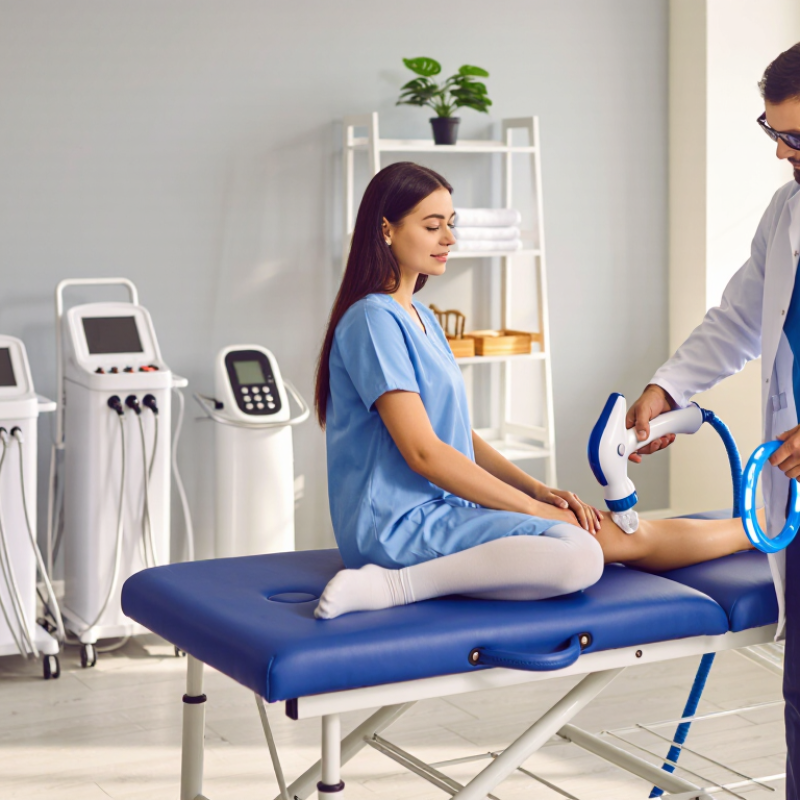
TECAR Therapy Explained: Capacitive and Resistive Radiofrequency Transfer
TECAR therapy uses radiofrequency energy to encourage heat within body tissues, rather than simply warming the skin. Capacitive and resistive modes describe different ways energy is transferred. Capacitive settings commonly target tissues with more fluid, such as muscles, while resistive settings are often selected for denser areas, including tendons. These are general tendencies, not fixed rules. Device design, settings, and the clinician’s technique all matter. You may feel a gentle, spreading warmth. It should not feel sharply painful.
The treatment is not entirely predictable. Tissue depth, sensitivity, and the size of the treatment area can change the sensation. A practitioner should ask about your health history and adjust the intensity to your comfort. Tell them promptly if warmth becomes uncomfortable, or if you feel burning, tingling, or pain. Some people feel little during a session; others notice warmth that lingers briefly. That difference alone does not show whether treatment is working. Research and protocols vary, so claims about results deserve careful consideration.
Tips: Wear comfortable clothing and describe what you feel in clear terms. Ask which mode is being used and why. Speak up early. “It feels too hot” is useful feedback, not a complaint. Avoid assuming that stronger warmth means better treatment.
7 Best Tecar Therapy Machines: Does Tecar Therapy Hurt? — Capacitive and Resistive Radiofrequency Transfer Explained
The table below compares common Tecar device configurations and features, not ranked models or brands. Equipment and treatment protocols vary; a qualified practitioner should select settings and assess suitability for each person.
| Device configuration | What it typically offers | Common treatment focus | Comfort and practical notes | What to check before choosing |
|---|---|---|---|---|
| 1. Dual-mode clinic console | Offers both capacitive and resistive modes, usually with compatible electrodes and adjustable output. | A flexible option for practitioners treating different body areas and tissue presentations. | The practitioner can adjust treatment to maintain a tolerable sensation; more features do not guarantee better results. | Confirm the available modes, electrode compatibility, operator training requirements, and service support. |
| 2. Portable dual-mode unit | A compact format that may provide both capacitive and resistive treatment, depending on the device. | Mobile practice or settings where equipment needs to be moved between treatment locations. | Portability can mean a smaller interface or fewer accessories; check that the setup suits the intended workload. | Check included electrodes, power requirements, cleaning instructions, warranty, and applicable regulatory clearance. |
| 3. Capacitive-mode focused unit | Designed around capacitive electrodes; some devices may also include other modes. | Capacitive transfer is commonly described as coupling more readily with water-rich, more superficial tissues. | A comfortable warmth may occur. Sensation depends on the settings, electrode contact, treatment area, and individual response. | Ask how output is adjusted and how the practitioner monitors skin comfort and electrode contact. |
| 4. Resistive-mode focused unit | Emphasizes resistive electrodes; the precise functions depend on the device design. | Resistive transfer is commonly described as interacting with higher-impedance tissues. This is a general explanation, not a guarantee of selective targeting. | Pressure, electrode movement, and energy level affect comfort. Treatment should not produce intolerable heat or sharp pain. | Verify that the intended electrode types and treatment protocols are covered by the device instructions and practitioner training. |
| 5. Unit with adjustable or pulsed output | May provide adjustable output modes, including pulsed settings on some devices. | Can give a practitioner additional options for adapting a session to the device’s intended use and the person’s tolerance. | Pulsed operation does not, by itself, establish that a treatment is more effective or more comfortable. | Check the manual for what each mode means, permitted settings, and any mode-specific precautions. |
| 6. Multi-electrode accessory system | May include different electrode sizes or shapes for use on different anatomical areas. | Offers flexibility in treating areas of different sizes, subject to the device instructions and practitioner technique. | Correct electrode contact and suitable movement matter; accessories must be used as directed. | Confirm which accessories are included, compatible, cleanable, and replaceable. |
| 7. Basic single-channel unit | A simpler control and accessory setup; available functions vary by device. | May suit a narrower set of professional treatment requirements when its capabilities match the intended use. | Fewer controls may simplify operation, but the practitioner still needs appropriate training and monitoring. | Check that the device has the required mode, output controls, documentation, and local regulatory status. |
Safety note: Tecar therapy may not be appropriate for everyone. Suitability depends on individual health, the treatment area, and the device instructions. Discuss relevant medical conditions, implanted electronic devices, pregnancy, altered sensation, or other concerns with a qualified healthcare professional before treatment.
FAQS
Check frequency range, adjustable output, power settings, operating modes, and electrode options. Use the same questions for every device.
No. A higher rating alone does not prove better results. Control, comfort, and suitable settings matter too.
They deliver energy differently. Clinicians should choose the mode and settings for the treatment area and patient.
Patients may feel warmth, but treatment should not be painful. Pause and reassess settings if heat feels excessive or discomfort becomes sharp.
Look for clear controls, an accessible stop function, and temperature monitoring where available. Check electrode placement and cleaning instructions.
A qualified clinician should review medical history, skin sensation, and implanted electronic devices. TECAR is not suitable for everyone.
Not automatically. Flexible settings may help, but each preset should serve a practical clinical need.
Notice whether the handpiece feels balanced and cables stay out of the treatment area. Check display clarity, cleaning, and electrode replacement costs.
Ask about staff training, servicing, routine maintenance, and replacement parts. Documentation may still leave some questions unanswered.
A table helps compare devices using consistent settings and questions. It cannot replace clinical judgment, and no single machine fits every clinic.
Conclusion
TECAR therapy uses radiofrequency energy delivered through capacitive and resistive modes to support treatment of muscles, joints, and other soft tissues. When comparing devices, clinicians can consider factors such as operating frequency, power options, treatment modes, and built-in safety features, then match those capabilities to their clinical setting and patient needs. The best choice depends not only on specifications, but also on usability, appropriate training, and the intended treatment applications.
A common question is “does tecar therapy hurt during physical rehab?” Most treatment is intended to feel comfortably warm, though sensations can vary with settings, treatment area, and individual sensitivity. Session length and parameters should be tailored to the patient, with contraindications and safety precautions assessed beforehand. Evidence and outcomes should also be considered realistically: TECAR may be used as part of a broader rehabilitation plan, rather than as a substitute for individualized clinical care.
