Top 10 Best Skincare Machines for Aging Skin

Time:2026-11-02 Author:Oliver
0%

Aging skin is not one problem. Fine lines, uneven tone, laxity, and rough texture may need different approaches. That is why “what is the best skincare beauty machine for aging skin” has no universal answer. The right choice depends on the concern, skin type, treatment setting, and willingness to follow safety guidance. Some devices use light or radiofrequency; others rely on gentler, surface-level care. Results vary.

The ISAPS Global Survey 2023 estimated 19.1 million nonsurgical aesthetic procedures worldwide. That figure includes injectables and other treatments, not just beauty machines, so it signals interest in aesthetics—not proof that any device works. For context, dermatologist and laser specialist Dr. Tina Alster’s patient-centered approach can be paraphrased this way: choose technology for the person’s skin concern, rather than its popularity. This is a paraphrase, not a direct quotation. A useful reminder.

This guide compares ten options by purpose, evidence, practical use, and potential drawbacks. It distinguishes professional treatments from at-home devices, since they are not interchangeable. A smooth-looking result in a product photo may not reflect typical outcomes. Before choosing, check the device’s intended use, instructions, and relevant regulatory status; seek qualified clinical advice for persistent or changing skin concerns. Rankings simplify. Real skin does not.
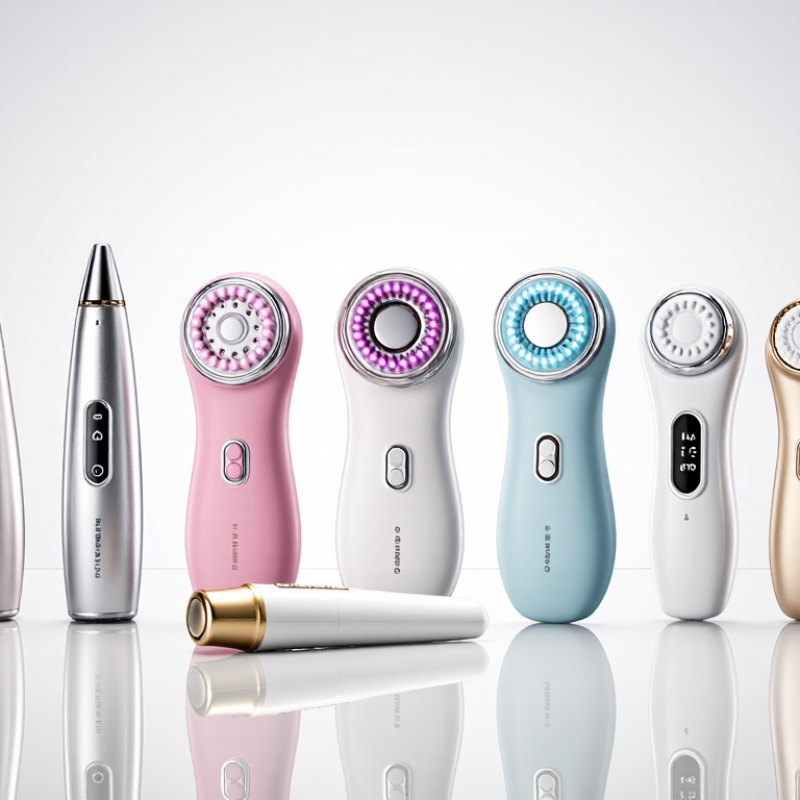
Top 10 Best Skincare Machines for Aging Skin

How Skin Aging Develops: Collagen Loss, Photoaging, and the AAD’s Evidence

Skin aging has two overlapping drivers: natural collagen loss and photoaging. With age, skin cells produce less collagen, while ultraviolet exposure triggers enzymes that break down existing collagen. The result can appear as fine lines, rough texture, and uneven pigmentation. A study of 298 women attributed 80.3% of visible facial aging signs to sun exposure; that figure describes its study group, not everyone (Flament et al., Clinical, Cosmetic and Investigational Dermatology, 2013). The American Academy of Dermatology recommends daily broad-spectrum sunscreen with SPF 30 or higher to help prevent premature aging.

This matters when judging skincare machines. Light-based and energy-based devices may improve selected concerns, but results vary with device settings, skin tone, and treatment history. They cannot erase accumulated sun damage or replace sun protection. The AAD advises discussing cosmetic procedures with a board-certified dermatologist, especially when a device promises dramatic results. A smooth photograph is not evidence. I admit that “before and after” images can still feel persuasive, even when lighting changes.

Tips: Use SPF 30+ daily, including on cloudy days. Ask a dermatologist which concern a device can realistically address. Pause if the claims sound absolute.

Skin Aging: An Illustrative Collagen Index

This simplified model illustrates the commonly cited estimate of roughly 1% less skin collagen per year with age; it is not a clinical measurement or an individual prediction. Actual changes vary. UV exposure also contributes to photoaging. The American Academy of Dermatology recommends broad-spectrum sunscreen with SPF 30 or higher to help protect against premature skin aging.

How to Evaluate Devices: FDA Status, Clinical Evidence, and Safety Data

When comparing skincare machines for aging skin, treat FDA status as a starting point, not a guarantee of results. Check the exact device and intended use in official FDA records. “FDA-cleared” and “FDA-approved” are not interchangeable, and neither phrase proves that a device will suit every user. Be wary of vague claims that skip the device’s regulatory category.

Clinical evidence should match the machine you are considering, not just a similar technology. Look for peer-reviewed human studies that describe participant numbers, treatment schedules, measured changes, and follow-up periods. A small study or short follow-up may offer useful clues, but it cannot establish lasting benefits. Funding and author conflicts matter, too. This detail is easy to miss.

Safety data deserves equal attention. Read the instructions for eye protection, session length, skin preparation, and possible irritation or burns. Check warnings for your skin type, medications, and health conditions; ask a qualified clinician if anything is unclear. A device that feels warm should not cause pain. Stop if your skin becomes unusually swollen or blistered. Honestly, even careful reviews leave gaps: long-term home-use data may be limited, so make decisions conservatively and keep realistic expectations.

Top 10 Best Skincare Machines for Aging Skin - How to Evaluate Devices: FDA Status, Clinical Evidence, and Safety Data

Rank Device Type Typical Aging-Skin Use FDA Status: What to Verify Clinical Evidence Key Safety Considerations Practical Fit
1 Fractional ablative CO₂ laser Resurfacing for photoaging, fine lines, and uneven texture. Some specific devices have FDA 510(k) clearance for defined resurfacing or wrinkle indications. Verify the exact model and cleared indication; clearance is not blanket approval for every CO₂ laser. Moderate-to-strong evidence for improvement in wrinkles and photodamage, with outcomes depending on treatment settings and patient selection. Redness, prolonged healing, infection, scarring, and post-inflammatory pigment changes are possible. Greater downtime and pigment risk than non-ablative treatments. Professional treatment; best suited to people prepared for recovery and careful aftercare.
2 Er:YAG ablative laser Resurfacing for fine lines, surface texture, and sun-damaged skin. Clearance and permitted indications vary by device. Check the FDA record for the precise model and intended use. Moderate evidence for resurfacing benefits. Results and recovery depend on treatment depth and settings. Risks include redness, infection, pigment changes, and scarring. It remains an ablative procedure requiring appropriate clinical care. Professional treatment for people seeking resurfacing and able to follow wound-care instructions.
3 Non-ablative fractional laser Gradual improvement in fine lines, photodamage, and skin texture without removing the full skin surface. Some devices have FDA clearance for specific aesthetic indications; the indication is model-specific, not shared by every device in this category. Moderate evidence for modest improvement, often after a series of treatments. Results are generally less dramatic than ablative resurfacing. Temporary redness and swelling are common; burns, infection, or pigment changes can occur. Eye protection is essential. Professional option for people who prefer less downtime and accept gradual results.
4 Intense pulsed light (IPL) Improving some visible signs of photodamage, including uneven pigmentation and redness; it is not a laser. Some IPL devices are FDA-cleared for specific indications. Check the exact model and indication; clearance for one use does not establish clearance for all cosmetic claims. Moderate evidence for selected pigmentary and vascular signs of photoaging. It is not a reliable treatment for deep wrinkles or significant skin laxity. Burns, blistering, eye injury, and temporary or lasting pigment changes can occur. Skin tone, recent tanning, and photosensitizing medicines affect risk. Professional treatment for selected discoloration or redness after a suitability assessment.
5 Monopolar or bipolar radiofrequency (RF) Non-ablative heating intended to improve the appearance of mild laxity or wrinkles. Some devices have FDA clearance for specific wrinkle-related indications. Confirm the exact model, treatment area, and cleared use. Moderate but variable evidence for modest tightening; studies and results differ by device and treatment protocol. Discomfort, redness, swelling, and burns are possible. Treatment should be performed according to device instructions by a qualified provider. Professional option for people seeking gradual, typically modest improvement with little surface disruption.
6 Microfocused ultrasound Non-surgical treatment intended to improve the appearance of laxity in selected areas, such as the brow, neck, or under-chin region. FDA clearance applies to particular devices, indications, and treatment areas. Verify the exact clearance rather than relying on a general “ultrasound lifting” claim. Limited-to-moderate evidence for modest lifting or tightening in selected patients; it does not reproduce surgical results. Temporary pain, tenderness, swelling, or bruising can occur. Incorrect depth or technique may cause burns or nerve-related injury. Professional procedure for carefully selected patients with mild-to-moderate laxity.
7 Radiofrequency microneedling Combined needle and RF treatment intended to improve texture, acne scarring, and some signs of photoaging. Clearance is specific to each device and indication. FDA clearance does not mean every treatment setting or cosmetic claim has been evaluated. Limited-to-moderate evidence, with study quality and results varying. More research is needed to compare devices and long-term outcomes. Risks include infection, burns, scarring, pigment changes, and unintended tissue damage. Use a qualified clinician; avoid unregulated at-home needle/RF procedures. Professional treatment only; discuss skin tone, medical history, and previous procedures before treatment.
8 Red or near-infrared LED device Non-invasive treatment marketed for fine lines and skin appearance. Some specific devices have FDA clearance for defined indications, while others do not. Verify the exact device and indication; “FDA registered” alone does not mean FDA-cleared or FDA-approved. Limited-to-moderate evidence for modest cosmetic improvement. Results are not equivalent to laser resurfacing or surgery, and home-device studies are often small. Use eye protection and follow exposure instructions. Stop if irritation or eye symptoms occur; seek medical advice if taking photosensitizing medication. Lower-downtime option for people with realistic expectations and willingness to use a device consistently.
9 Microdermabrasion device Mechanical exfoliation for temporary improvement in surface roughness and dullness. Regulatory status depends on the device and intended use. Check the specific FDA record; registration or listing is not the same as FDA clearance. Limited evidence for meaningful wrinkle reduction. Any improvement is generally superficial and temporary. Possible irritation, abrasions, or worsening of sensitive or inflamed skin. Avoid use over open wounds or active skin infections. May suit mild surface-texture concerns, but is not a device for substantial wrinkles or laxity.
10 Microcurrent facial device Low-level electrical stimulation marketed for temporary facial toning or appearance. Regulatory status and permitted claims vary. A device cleared for a different electrical-stimulation purpose is not automatically cleared for cosmetic wrinkle treatment. Limited evidence for durable improvement in aging-related wrinkles or laxity; independent, long-term studies are sparse. Follow the device instructions. Do not use without medical guidance if you have an implanted electronic device, relevant heart condition, or other listed contraindication. Consider only for modest, temporary cosmetic expectations—not as a substitute for established treatments.

How to evaluate a device: FDA clearance or approval applies to a specific device and intended use, not automatically to an entire technology category. Search the exact device in the FDA 510(k) database and confirm that its cleared indication matches the claim being made. Evidence ratings above summarize the general literature for each treatment type; they are not a guarantee of an individual result. A dermatologist or other qualified clinician can assess skin type, medical history, and treatment risks.

Top 10 Skincare Machines by Technology: LED, Radiofrequency, and More

Skincare machines differ by the energy or surface treatment they use. LED devices deliver selected wavelengths of light; red and near-infrared options are commonly marketed for signs of aging. Radiofrequency warms deeper tissue, while ultrasound concentrates energy below the surface. Microcurrent devices use gentle electrical currents. Results vary, and home devices are generally less powerful than clinic equipment.

Other technologies include intense pulsed light, fractional lasers, non-ablative lasers, radiofrequency microneedling, microdermabrasion, and electroporation. They are not interchangeable. Some can cause burns, pigment changes, or irritation, especially on sensitive skin or darker complexions. A dermatologist can help match a device to skin type and treatment goals. Check the instructions and avoid treating irritated skin. Small print matters.

The American Society of Plastic Surgeons’ 2023 procedural report recorded about 3.7 million skin-resurfacing procedures. That figure reflects procedure volume, not proof that every machine works equally well. It also does not mean all treatments were device-based. I would not treat a glowing screen as proof. Before buying, check what the device actually targets, how often it must be used, and whether its claims are supported by clinical evidence. Skin changes slowly, and consistent sunscreen use remains important.

Compare Clinical Results, Risks, Treatment Time, and Typical Costs

The ten common options range from LED and microcurrent to microdermabrasion, IPL, ultrasound, radiofrequency, fractional RF microneedling, non-ablative lasers, ablative lasers, and intense focused ultrasound. LED may offer subtle changes with repeated sessions; resurfacing lasers can improve wrinkles and sun damage more noticeably. Results vary with skin tone, device settings, and operator skill. No machine stops aging.

Treatment time can be 15 minutes for LED or microcurrent and over an hour for some resurfacing procedures. Downtime matters. IPL and non-ablative treatments may cause temporary redness; ablative lasers can mean days or weeks of healing. Burns, pigment changes, scarring, and infection are possible, especially with poor screening or technique. The FDA warns that RF microneedling can cause serious complications, including burns and scarring. In the 2023 American Society of Plastic Surgeons statistics report, laser skin resurfacing had an average surgeon fee of $1,829; this excludes possible facility and anesthesia fees. Less invasive sessions often cost less, but local prices vary widely.

Tips: Ask for the device type, expected session count, recovery plan, and written total cost. Check who performs treatment and their training. Request before-and-after photos of patients with similar skin tone, and discuss pigment risks. A quoted price is not a clinical result.

Match Devices to Skin Concerns and Follow the AAD’s SPF 30+ Guidance

For aging skin, choose a device by concern, not by its “lifting” claims. Red-light devices may help soften the look of fine lines, while microcurrent tools aim to create a temporary toned appearance. Results vary, and home devices are not interchangeable with professional treatments. AAD guidance puts daily sun protection first: use broad-spectrum sunscreen with SPF 30 or higher, and reapply every two hours outdoors. Consistency matters more than a crowded bathroom shelf.

The evidence supports that emphasis. In a randomized trial of 903 adults, daily sunscreen users had 24% less progression of measured skin aging than people who used sunscreen at their discretion over 4.5 years (Hughes et al., Annals of Internal Medicine, 2013). It was a real-world study, not proof that sunscreen erases existing lines. That distinction is easy to miss. If a device causes persistent redness, pain, or irritation, stop using it and seek professional advice.

Tips: Match one device to one concern, then follow its instructions and track changes with photos in the same light. Keep sunscreen beside your morning moisturizer; apply it to exposed skin, including the neck and ears. A device routine can feel satisfying, but I’d still question dramatic before-and-after claims. The lighting may be doing some of the work.

FAQS

What causes visible skin aging?

Aging reduces collagen production, while ultraviolet exposure breaks down existing collagen. Fine lines, rough texture, and uneven pigmentation may follow.

How much visible facial aging may be linked to sun exposure?

One study of 298 women attributed 80.3% of visible facial aging signs to sun exposure. That finding may not apply to everyone.

Can skincare machines reverse sun damage?

Devices may improve selected concerns, but they cannot erase accumulated sun damage or replace sun protection. Results vary.

What sunscreen routine can help prevent premature aging?

Use broad-spectrum sunscreen with SPF 30 or higher every day, including on cloudy days. Consistency matters.

How do common skincare devices work?

LED devices use selected light wavelengths. Radiofrequency warms deeper tissue, while ultrasound focuses energy below the surface. Microcurrent devices use gentle electrical currents.

Are home devices as powerful as clinic equipment?

Home devices are generally less powerful. Their results may also depend on settings, skin tone, and treatment history.

What risks can energy-based treatments have?

Some treatments may cause burns, pigment changes, or irritation. Sensitive skin and darker complexions may need extra care. Ask a dermatologist.

Are before-and-after photos reliable proof?

Not always. Changes in lighting can make results look stronger. I still find those images persuasive, which is worth questioning.

Conclusion

Skin aging develops through gradual collagen loss and cumulative sun exposure, which can contribute to wrinkles, uneven tone, and changes in skin firmness. This overview explains how these processes differ and how to assess skincare devices by looking at their regulatory status, clinical evidence, safety information, and realistic expectations. It compares ten types of at-home or professional technologies, including LED light and radiofrequency, while considering what studies can—and cannot—tell us about visible results.

There is no single answer to “what is the best skincare beauty machine for aging skin,” because suitability depends on individual concerns, skin sensitivity, treatment time, cost, and risk tolerance. The guide weighs these factors to help readers compare options thoughtfully, identify when professional advice may be appropriate, and choose a device that fits their routine. It also emphasizes that devices are not substitutes for everyday sun protection: following the American Academy of Dermatology’s guidance to use broad-spectrum SPF 30 or higher remains an important part of caring for aging skin.

Oliver

Oliver

Oliver is a seasoned marketing professional with a wealth of expertise in driving brand awareness and engagement. With a deep understanding of our company's product offerings, he consistently delivers high-quality content that enriches our professional blog. His insights not only shed light on......