How Many Sessions Does Tattoo Removal Actually Take?
How many sessions does tattoo removal actually take? The honest answer is rarely a neat number. Most people need multiple laser treatments, often spaced six to twelve weeks apart. The skin needs time to heal, while the body gradually clears fragmented ink. It is slow work.
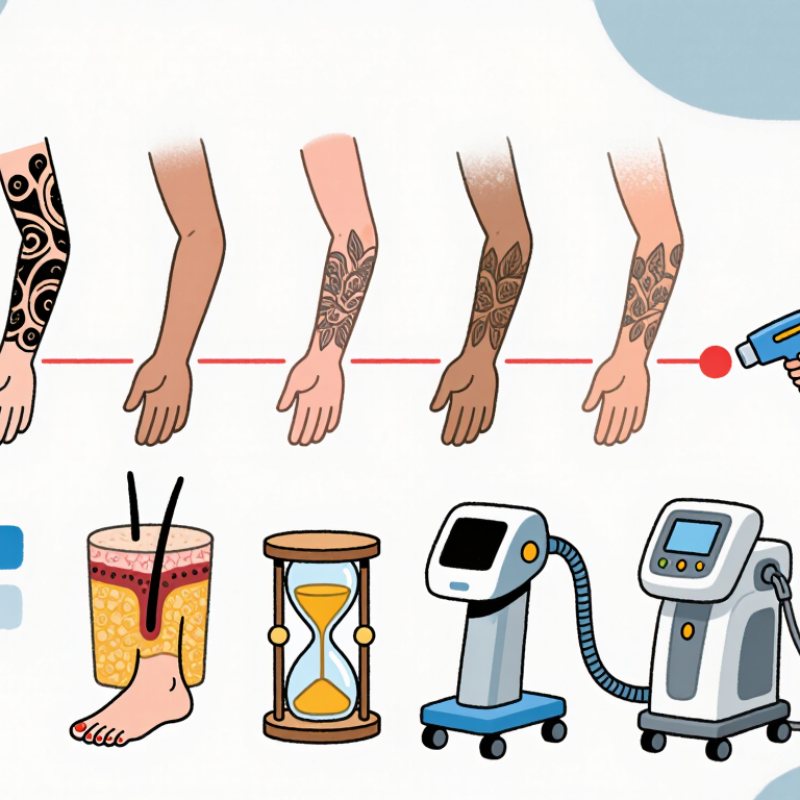
Dr. Will Kirby, a board-certified dermatologist and laser-treatment specialist, describes the reality plainly: “There is no magic wand when it comes to tattoo removal.” His observation matters because treatment results depend on several visible and hidden factors. Ink color, tattoo depth, pigment density, skin tone, location, age, and the laser technology used can all change the timeline. A small, faded black tattoo on the forearm may respond faster than dense, multicolored ink near the ankle.
Some tattoos improve noticeably after three sessions. Others may require eight, ten, or more. That can feel frustrating. It can also be normal. A qualified provider should examine the tattoo, review your medical history, explain likely risks, and avoid promising complete removal. Professional experience helps, but no ethical specialist can guarantee an exact session count before seeing the skin.
This guide explores how many sessions does tattoo removal actually take, what affects the estimate, and why spacing treatments matters. It also considers a less comfortable truth: “fading” is not always the same as “gone.” Patience matters. So does reassessment. Progress should be measured through healing photographs, changing pigment density, and realistic expectations—not wishful thinking.
What Determines the Number of Tattoo Removal Sessions?
How Many Sessions Does Tattoo Removal Actually Take?
The session count depends on more than tattoo size. Ink color, density, depth, body location, skin type, scarring, and layering all influence clearance. A dense black tattoo on the ankle may need more sessions than a lighter tattoo on the upper arm. Blood circulation and lymphatic drainage matter. Healing matters too.
A 2009 study in Archives of Dermatology reviewed 100 patients and reported an average of 10.25 treatments, with results ranging from three to twenty sessions. Its prediction scale considered six factors, including tattoo location, color, amount of ink, scarring, skin type, and whether the tattoo was layered. Black ink often responds more predictably, while turquoise, green, yellow, and some red pigments can remain stubborn.
Most clinics schedule treatments several weeks apart, often six to eight weeks, allowing the skin and immune system to recover. Longer intervals may be safer for darker skin or slower healing. A consultation should examine the tattoo closely, not rely on size alone. Test spots can reveal how the pigment reacts. They are useful, but not perfect. Real skin is less predictable than a chart. Medical history, sun exposure, smoking, and aftercare can also change the timeline. Clearance may be incomplete. That possibility deserves an honest discussion.
How Many Sessions Does Tattoo Removal Actually Take? - What Determines the Number of Tattoo Removal Sessions?
| Factor | Typical Effect on Treatment | Common Session Range or Timing | Why It Matters |
|---|---|---|---|
| Small, simple black tattoo | Usually among the easiest tattoos to treat | Approximately 4–8 sessions | Black pigment generally absorbs laser energy efficiently, and a small design contains less ink. |
| Large or heavily saturated tattoo | Often requires more sessions | Approximately 8–15+ sessions | A larger area and higher pigment load require repeated treatment and gradual clearance by the body. |
| Black or dark-blue ink | Typically responds better than many lighter colors | Often about 4–10 sessions | These colors commonly absorb wavelengths used for tattoo pigment fragmentation. |
| Green, yellow, orange, or red ink | May be more resistant or require different laser wavelengths | Often about 8–15+ sessions | Some pigments do not respond equally to one wavelength, so treatment may be more complex. |
| Professional tattoo | Frequently takes more sessions than a light amateur tattoo | Approximately 6–15+ sessions | Professional work is often deeper, denser, and more evenly packed with pigment. |
| Amateur or homemade tattoo | Can be faster to fade, but results are less predictable | Approximately 3–8+ sessions | Pigment depth and distribution vary widely; some marks may be unusually deep or uneven. |
| Older, naturally faded tattoo | May need fewer sessions than a fresh, dense tattoo | Often about 4–10 sessions | Previous sun exposure and natural immune clearance may already have reduced some pigment. |
| Tattoo location | Areas with better circulation may fade more efficiently | Usually 6–12 week intervals between sessions | The body needs time to break down and remove fragmented pigment; feet and lower legs may clear more slowly. |
| Skin tone and tanning status | May influence laser settings and treatment speed | May require longer intervals or more conservative treatment | Reducing the risk of pigment changes is important, particularly when treating darker or recently tanned skin. |
| Cover-up tattoo | Usually more difficult than a single-layer tattoo | Approximately 10–20+ sessions | Multiple pigment layers and dense coverage increase the total amount of ink to be cleared. |
| Individual healing and immune response | Can shorten or lengthen the overall process | The complete process may take 12–24 months or longer | Laser treatment breaks pigment into smaller particles, but the body removes those particles gradually. |
FAQS
Focused light breaks pigment into smaller fragments during treatment. The body gradually clears many fragments through immune and lymphatic processes. Progress continues after the surface looks normal.
Most people need several sessions, but no fixed number applies. Tattoo size, age, ink depth, color, layering, and skin tone affect fading. A small, older tattoo may respond sooner.
Clinics often schedule sessions six to ten weeks apart. A qualified practitioner may adjust this interval after examining your skin. Waiting supports healing and pigment clearance.
Redness, warmth, swelling, or slight elevation may appear. Tiny blisters or crusts can also develop. These reactions often settle within several days, but healing varies.
Keep the area clean and follow the provided washing or dressing instructions. Avoid rubbing, scratching, or picking scabs. Loose clothing can reduce friction over covered skin.
Irritated skin can darken or heal unevenly after sun exposure. Protect the area from direct sunlight while it recovers. A shaded sleeve can help.
No. Black ink often responds more predictably. Green, blue, and pale pigments may fade more slowly. Uneven fading is possible.
Seek prompt medical advice for increasing pain, spreading redness, pus, fever, or worsening swelling. Do not judge healing only by appearance. I once assumed less redness meant faster progress, but that was wrong.
Conclusion
How many sessions does tattoo removal actually take depends on several factors, including the tattoo’s size, ink colors, depth, age, location, skin type, and the body’s natural healing response. Many tattoos require multiple treatments rather than a single session because laser energy breaks pigment into smaller particles gradually. Darker, simpler tattoos may respond more predictably, while colorful, dense, layered, or professionally applied designs can require a longer treatment plan. Smaller tattoos may need only a few sessions, whereas larger or more complex tattoos may take many months of care.
Between sessions, the skin needs time to recover and the body continues clearing fragmented pigment. Temporary redness, swelling, sensitivity, or mild blistering can occur, so following aftercare instructions is important. Progress is evaluated by comparing the tattoo’s fading, skin condition, and healing response over time. Treatment intervals and laser settings may then be adjusted to support steady fading while reducing the risk of irritation or unwanted skin changes.
