How Does Laser Hair Removal Work on Dark Skin Safely?
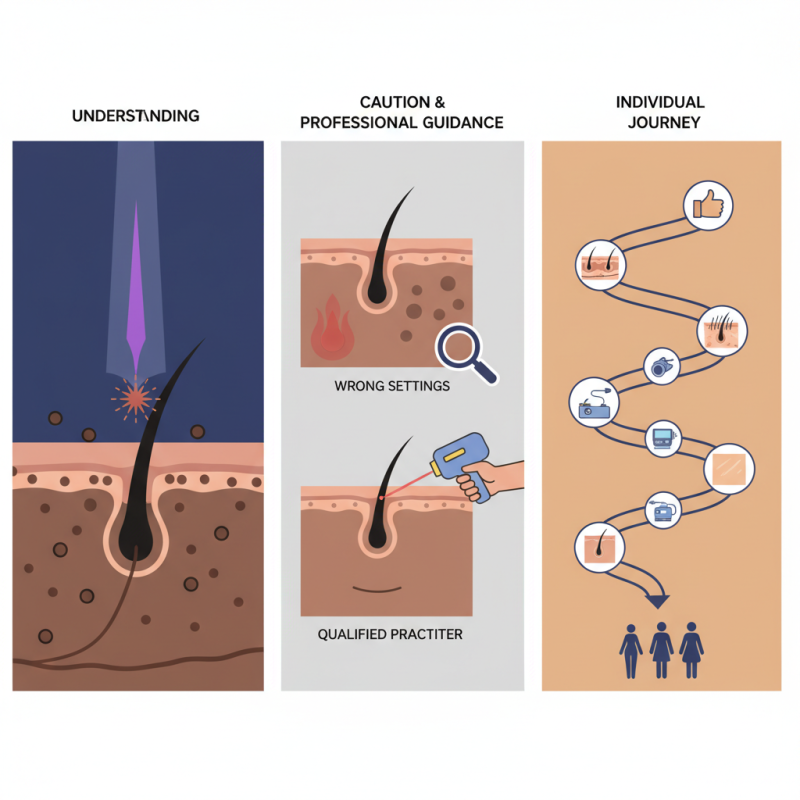
Laser hair removal has become increasingly popular, but many wonder how it impacts darker skin tones. Understanding how does laser hair removal work on dark skin is crucial for safe and effective treatment. The procedure relies on specific wavelengths of light to target hair follicles. However, darker skin tones contain more melanin, which can absorb this light differently.
People with dark skin need to be cautious. If the wrong settings are used, there's a risk of burns or discoloration. It’s essential to consult with professionals who have experience with diverse skin types. A qualified practitioner should assess your skin and choose appropriate settings. They must ensure the laser used is safe and effective for your complexion.
In the pursuit of smooth skin, individuals should weigh their options. Real-world outcomes may vary. Experiences can differ based on skin type, hair texture, and technology used. Being informed is crucial for making the best decision. Every individual’s journey is unique, and it's important to consider personal factors when deciding on treatment.
Understanding Skin Types: The Fitzpatrick Scale and Dark Skin
The Fitzpatrick Scale categorizes skin types based on their response to UV exposure. It ranges from Type I (very light skin) to Type VI (dark skin). Understanding this scale is essential for safely performing laser hair removal on darker skin. Individuals with darker skin types, specifically Types IV to VI, have more melanin. This increased melanin can absorb laser energy, posing risks of hyperpigmentation or burns if inappropriate methods are used.
Studies indicate that the right laser technology can mitigate risks for darker skin. The American Academy of Dermatology reports that specific lasers, like Nd:YAG, target hair follicles effectively without harming surrounding skin. Safety measures and expert techniques are vital. Treatment should be personalized considering skin type, hair color, and thickness. While many clinics offer laser hair removal, not all practitioners possess adequate experience with darker skin types. Having appropriate consultation and a skilled technician is critical to ensure safety and effectiveness. It’s crucial to approach treatments with caution and awareness of potential side effects.
How Does Laser Hair Removal Work on Dark Skin Safely? - Understanding Skin Types: The Fitzpatrick Scale and Dark Skin
| Skin Type (Fitzpatrick Scale) | Characteristics | Best Laser Options | Safety Considerations |
|---|---|---|---|
| Type IV | Light brown skin; tans easily | Nd:YAG Laser | Use appropriate settings to avoid hyperpigmentation |
| Type V | Brown skin; rarely burns | Long-Pulsed Nd:YAG | Test patches recommended |
| Type VI | Dark brown skin; never burns | Nd:YAG Laser | Careful monitoring for skin changes |
FAQS
: The primary challenge is the melanin levels, which can lead to skin damage.
Advanced lasers use softer wavelengths to differentiate between skin and hair color, minimizing risks.
The YAG laser is popular; it has longer wavelengths and safely targets hair follicles without damaging skin.
Skilled practitioners understand dark skin needs and can evaluate skin type and hair characteristics effectively.
It's crucial to avoid direct sunlight to prevent complications like hyperpigmentation.
Use a broad-spectrum sunscreen with SPF 30 or higher to protect the treated areas daily.
Gently moisturizing with fragrance-free products helps soothe irritation and maintain hydration.
Avoid harsh scrubs or exfoliants for at least a week to prevent skin sensitivity.
Regular check-ins with a skincare professional can provide personalized aftercare tips and monitor reactions.
Patience and consistent care are vital as it can take time to achieve the best outcomes.
Conclusion
Laser hair removal can be effective and safe for individuals with dark skin, but understanding the unique characteristics of darker skin tones is essential. The Fitzpatrick Scale helps categorize various skin types and highlights the special considerations for darker skin, which tends to contain more melanin. When discussing how does laser hair removal work on dark skin, it is crucial to note that specific laser technologies can selectively target hair follicles while minimizing the risk of skin damage.
Safety concerns arise with the use of certain lasers on darker skin, as the increased melanin can absorb more light, leading to a higher risk of burns or hyperpigmentation. Therefore, choosing the right laser, such as those that operate at wavelengths safely absorbed by hair but not the surrounding skin, is paramount. Additionally, post-treatment care plays a significant role in ensuring the effectiveness and safety of the procedure, further emphasizing the need for tailored approaches when addressing laser hair removal for dark skin.
