When considering prenatal imaging, parents often ask, "why is 4D ultrasound better than 3D for pregnancy?" Experts in the field emphasize the value of 4D technology. Dr. Sarah Thompson, a renowned ultrasound specialist, stated, “4D ultrasound offers real-time images that foster a deeper connection with the unborn child.” This insight highlights why parents may choose 4D over traditional 3D scans.
4D ultrasounds provide dynamic visuals, capturing movement and expressions of the fetus. This feature can enhance emotional bonding, creating memorable experiences during pregnancy. Moreover, 4D imaging enables better assessments of fetal health, reassuring parents about their baby’s well-being. The investment in 4D technology often outweighs the static images that 3D provides.
However, some might question if the benefits justify the cost or if the emotional impact is truly significant. It’s essential to weigh these aspects carefully. While 4D ultrasounds offer more vivid details, individual preferences and financial considerations can influence choices. Ultimately, the decision rests on what parents value most in their pregnancy journey.
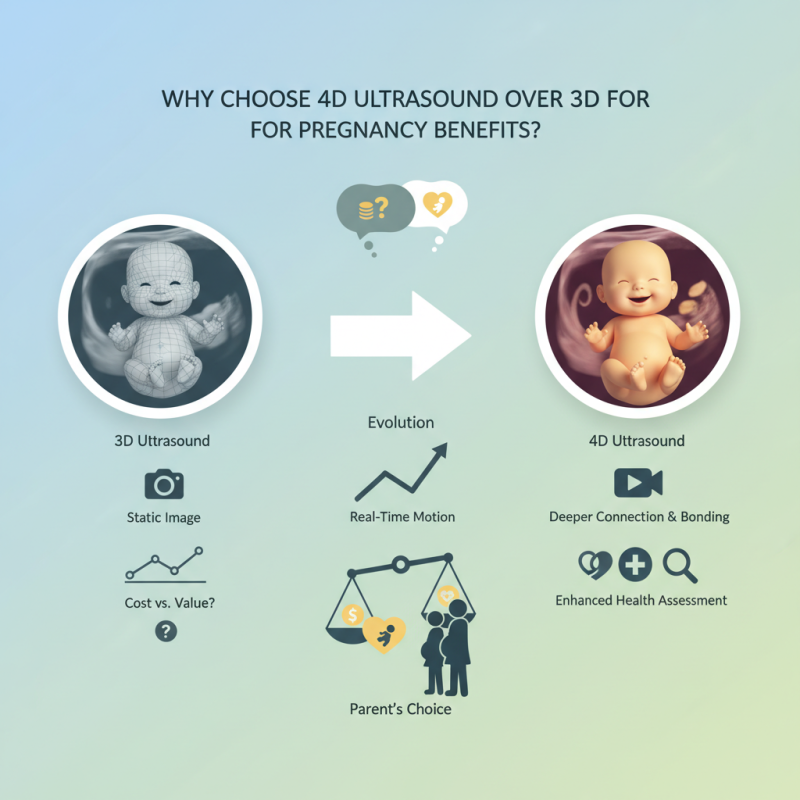
4D ultrasound offers significant advantages over 3D imaging during pregnancy. Expecting parents find this technology enriching. The real-time motion capture of the baby provides a unique experience. You can see your baby's movements, smiles, and even yawns. This immersive experience cultivates a deeper emotional connection before birth.
One key benefit of 4D ultrasound is its ability to provide clearer images. The depth perception is superior to 3D imaging. Detailed images can help detect potential issues early on, giving parents peace of mind. Additionally, seeing the baby’s features in motion can provide reassurance that everything is developing as it should.
Tips for getting the best experience with 4D ultrasound include timing your appointment carefully. The ideal time is typically between 26 to 30 weeks of pregnancy. Going after a meal may also help as the baby will be more active. Furthermore, ensure you stay hydrated for optimal image clarity. However, keep in mind that not all babies cooperate during these scans. Sometimes, they may hide their faces or turn away, which might cause disappointment. It's essential to embrace these imperfect moments.
4D ultrasound has emerged as a significant advancement in prenatal imaging, offering enhanced benefits compared to traditional 3D ultrasound. One of the most remarkable features is real-time imaging, which captures moving images of the fetus. According to a study published in the Journal of Ultrasound in Medicine, 4D imaging can help parents bond with their unborn baby, making the experience more emotional and engaging.
The real-time capability of 4D ultrasound allows expectant parents to witness their baby's movements, such as yawning, stretching, and even facial expressions. A survey conducted by the American Institute of Ultrasound in Medicine found that 90% of parents who experienced 4D ultrasounds reported feeling a deeper connection with their child. In a world where prenatal imaging can often feel clinical, the dynamic visuals create a sense of intimacy.
However, the technology does have its limitations. Factors such as maternal obesity or insufficient amniotic fluid can hinder the clarity of images. Additionally, not all clinics are equipped with the latest 4D technology, which can affect availability. While 4D ultrasound provides extraordinary insights into fetal development, parents should remain aware of the potential challenges and focus on the overall experience rather than just the visual aspects.
4D ultrasound technology offers a unique advantage compared to 3D imaging during pregnancy. The ability to visualize a baby's movements in real-time creates a profound emotional connection for parents. Unlike static 3D images, 4D scans capture moving images, showcasing your baby’s gestures, facial expressions, and even yawns. This dynamic interaction helps parents bond with their child even before birth.
Research shows that emotional bonding during pregnancy can positively impact both maternal and fetal health. According to a study published in the Journal of Perinatal Medicine, enhanced emotional attachment reduces maternal anxiety and increases maternal satisfaction. Seeing your baby smile or wiggle can elicit feelings of joy and closeness, laying the groundwork for a strong parent-child relationship.
**Tips:** During your ultrasound appointment, engage with the technician about what you see. Ask them to point out specific movements. Use the experience to create a family memory. Consider bringing a partner or family member along. Sharing this moment can amplify emotional responses. Reflect on each movement and what it means for you. This process fosters a deeper understanding and connection with your unborn child.
The overall experience of 4D ultrasound is strikingly different from its 3D counterpart. Expectant parents often feel a deep emotional connection during a session. The real-time motion and vivid imagery bring the baby to life in a way that 3D cannot. This dynamic quality contributes to a sense of clarity and reassurance. The technology captures intricate details of the baby's features. Pricing may vary, but the comfort it provides can be invaluable.
While 3D offers detailed images, 4D enhances the interaction. This may alleviate anxieties about the pregnancy. Many families report feeling more connected after seeing their baby's smiles or yawns. However, not every clinic provides skilled technicians or high-quality equipment. Finding a reliable facility is essential for achieving the best experience. Some parents have even noted that the visit can feel overwhelming due to the emotional weight.
Imagine watching your baby waving or moving in real-time. The comfort of having this experience often helps in processing the pregnancy journey. Yet, there are moments of uncertainty and moments of joy. Families may question how accurate these images are. Understanding the limitations of the technology can lead to more realistic expectations. In the end, it’s about celebrating the life that’s growing, regardless of the medium.
This chart illustrates the key comparisons between 4D and 3D ultrasound benefits during pregnancy. The percentages reflect the overall comfort level, clarity of images, emotional connection, and information provided by each type of ultrasound. As shown, 4D ultrasound generally provides a higher level of comfort and clarity compared to 3D ultrasound.
When considering the investment in 4D ultrasound over 3D, cost is a significant factor. A study published in the Journal of Ultrasound Medicine reported that 4D scans could range from $150 to $300, while 3D scans typically cost between $100 to $200. This price difference raises questions about the added value that 4D technology provides.
4D ultrasound offers real-time visualization of fetal movement and facial expressions. This feature can enhance emotional bonding for parents during pregnancy. However, the practical benefits vary for each family. Some expectant parents may find 3D imaging sufficient for their needs, thus making it a more budget-friendly option.
Investing in 4D ultrasound may not be necessary for everyone. Some practitioners argue that the clinical need does not justify the higher cost. Research indicates that nearly 70% of parents report being satisfied with their 3D experience. This statistic suggests that while 4D has its advantages, it is essential to evaluate whether the emotional benefits are worth the extra financial commitment.
: 4D ultrasound offers real-time images of the fetus, capturing movements like yawning and stretching.
Parents often feel a deeper connection to their baby, as the dynamic visuals create engaging experiences.
Not all clinics have the latest 4D technology, which may limit access for some parents.
Maternal obesity or low amniotic fluid can hinder image quality during the ultrasound.
Engage with the technician, ask questions, and bring a partner to share the emotional experience.
The cost of 4D scans can be higher, and some parents might find 3D imaging sufficient for their needs.
4D ultrasound usually costs between $150 to $300, while 3D scans are generally $100 to $200.
Emotional bonding during pregnancy can reduce maternal anxiety and enhance overall satisfaction.
Investing in 4D may not be necessary for everyone; about 70% of parents are satisfied with 3D scans.
It’s important to focus on the overall experience, rather than just the visual aspects of the ultrasound.
The article "Why Choose 4D Ultrasound Over 3D for Pregnancy Benefits?" explores the numerous advantages of 4D ultrasound technology compared to its 3D counterpart. One of the key benefits is the enhanced visualization that 4D provides through real-time imaging, allowing parents to see their baby's movements and features in a more dynamic way. This not only increases the emotional connection between parents and the unborn child but also contributes to a more engaging overall experience during pregnancy.
Furthermore, the article addresses cost considerations, discussing whether the investment in 4D ultrasound is justified when compared to 3D. Ultimately, it answers the crucial question of why is 4D ultrasound better than 3D for pregnancy by highlighting its superior imaging capabilities, emotional bonding potential, and the clarity it brings, making it a more favorable choice for expectant parents.
