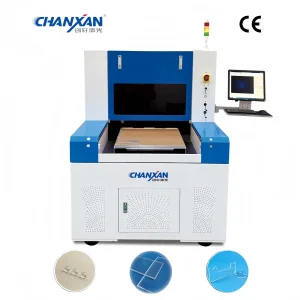
⚙️
Basic Specifications
Application
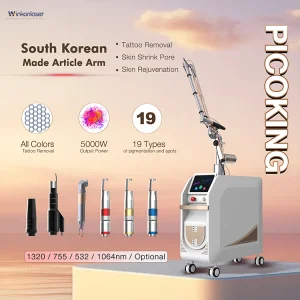
Salon, Professional Home Use
Type
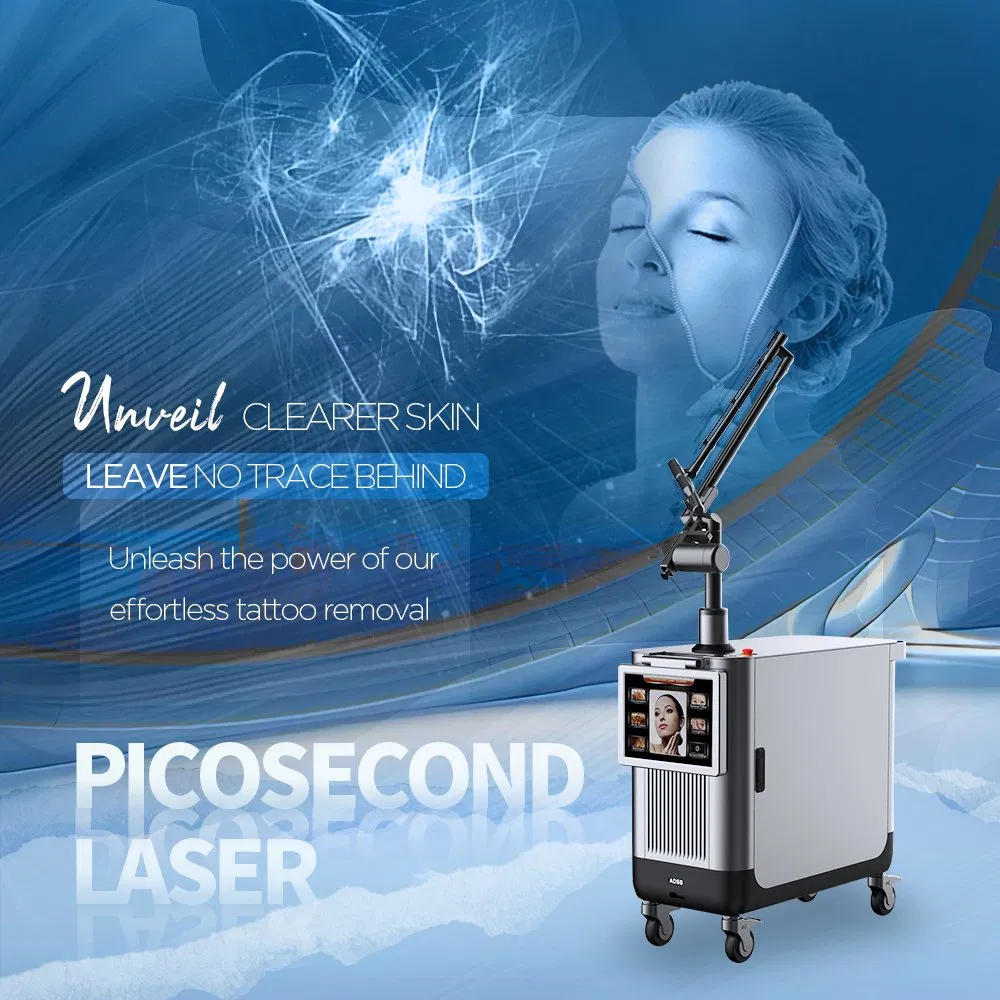
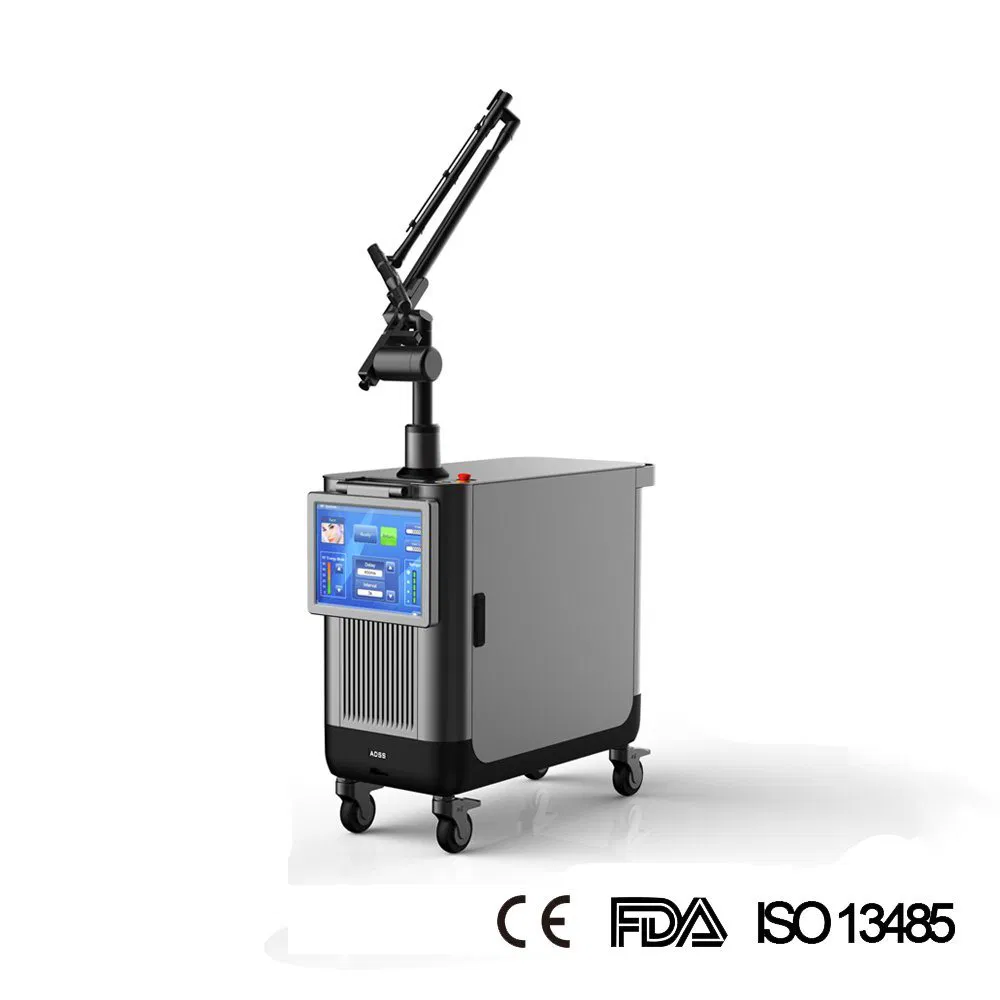
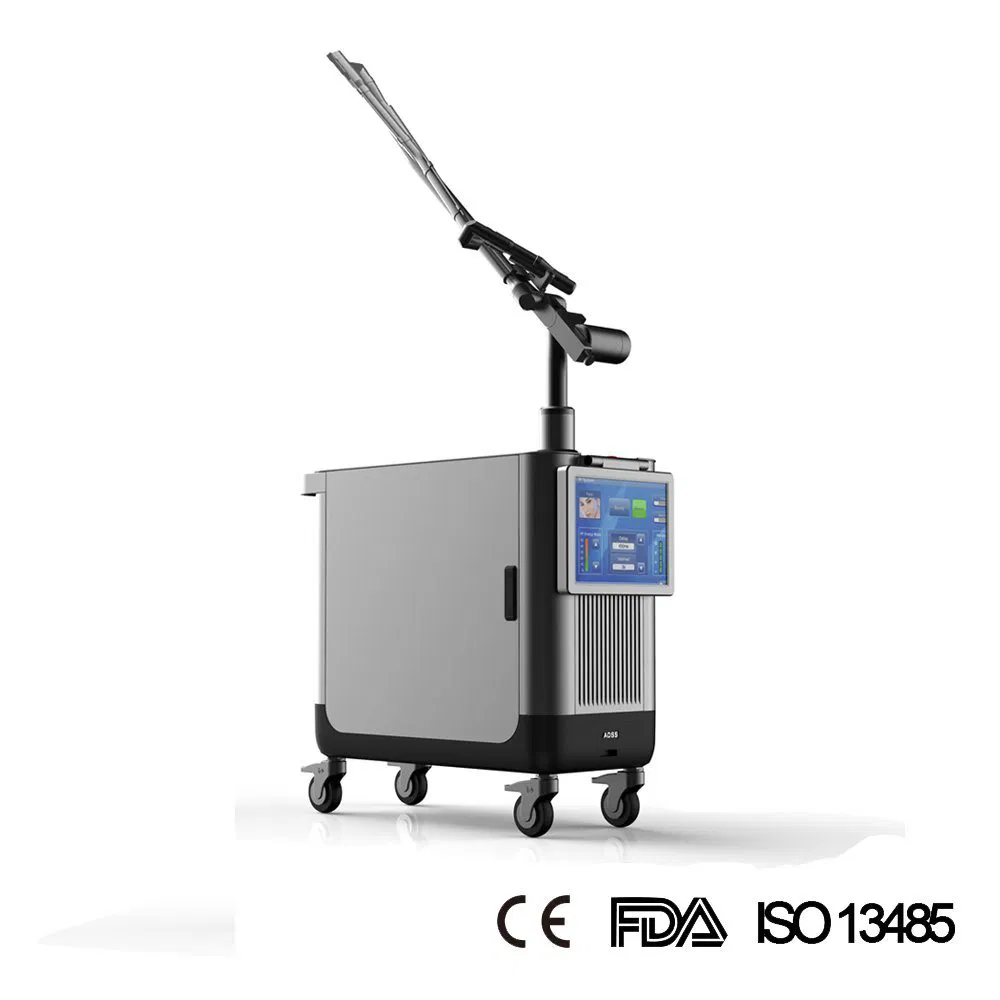
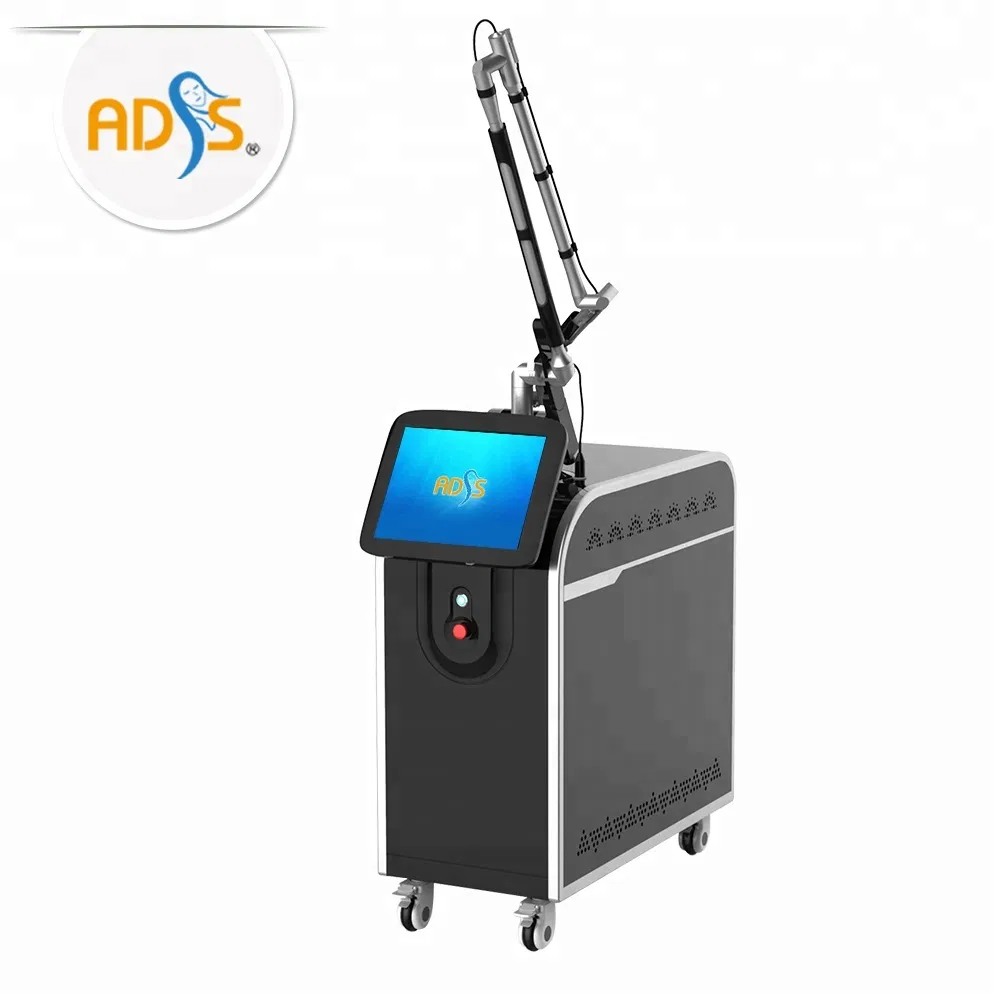
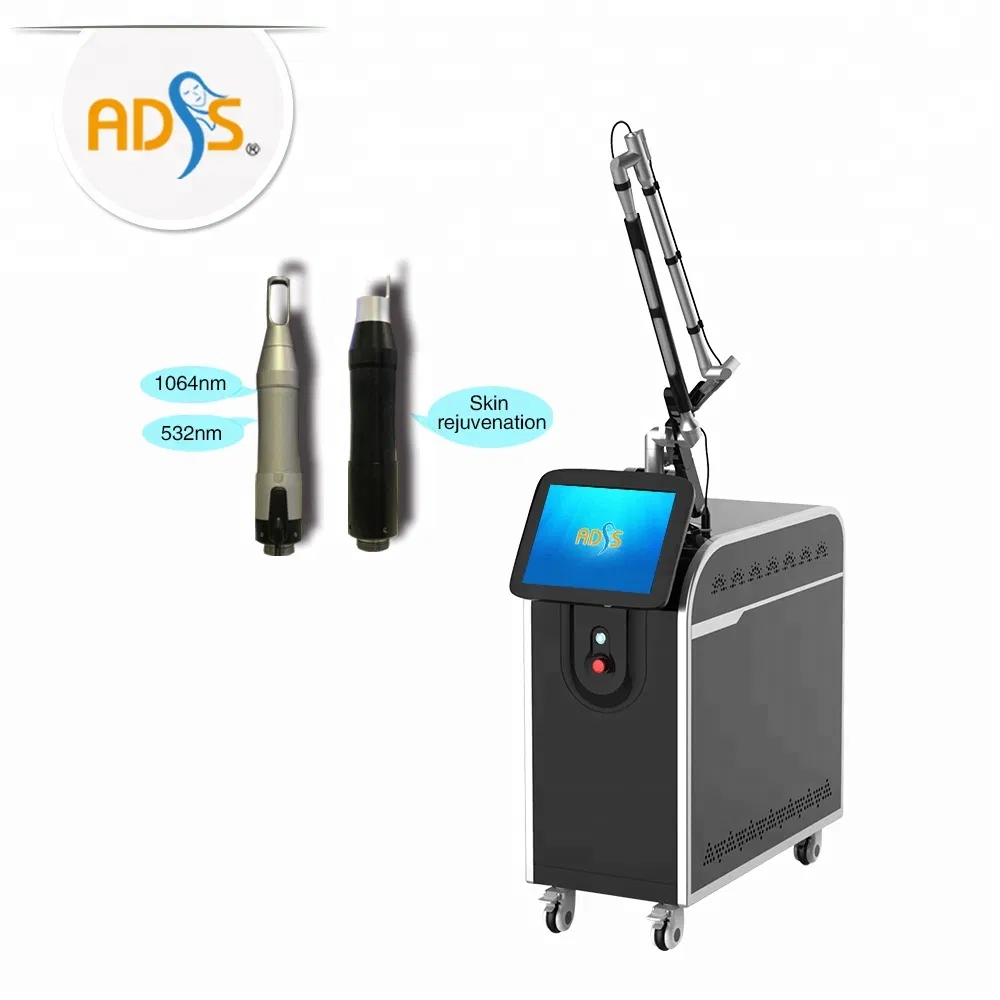
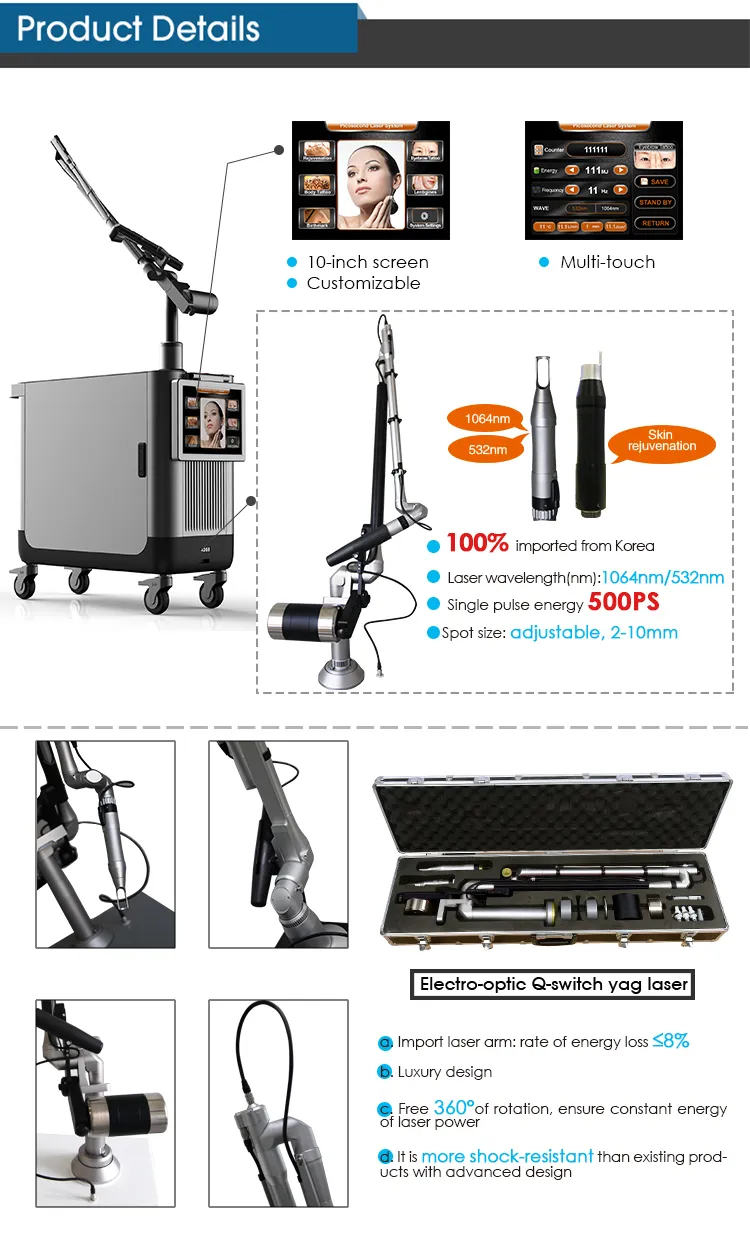
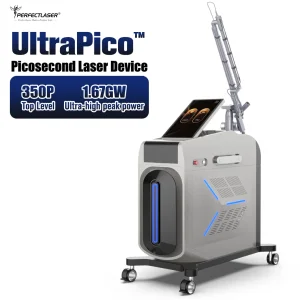
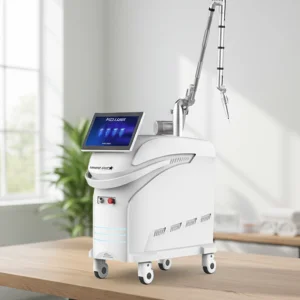
Stationary Picosecond Laser
Function
Tattoo & Pigment Removal
Frequency
1-10Hz Adjustable
Package
Protective Flight Case
Dimensions
63 x 46 x 110 cm
💎
Picosecond ND YAG Technology
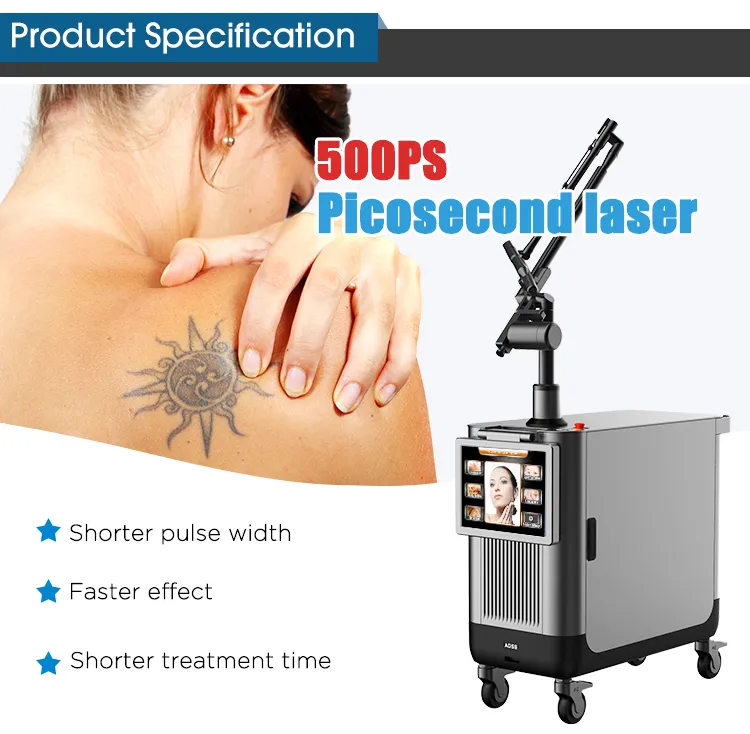
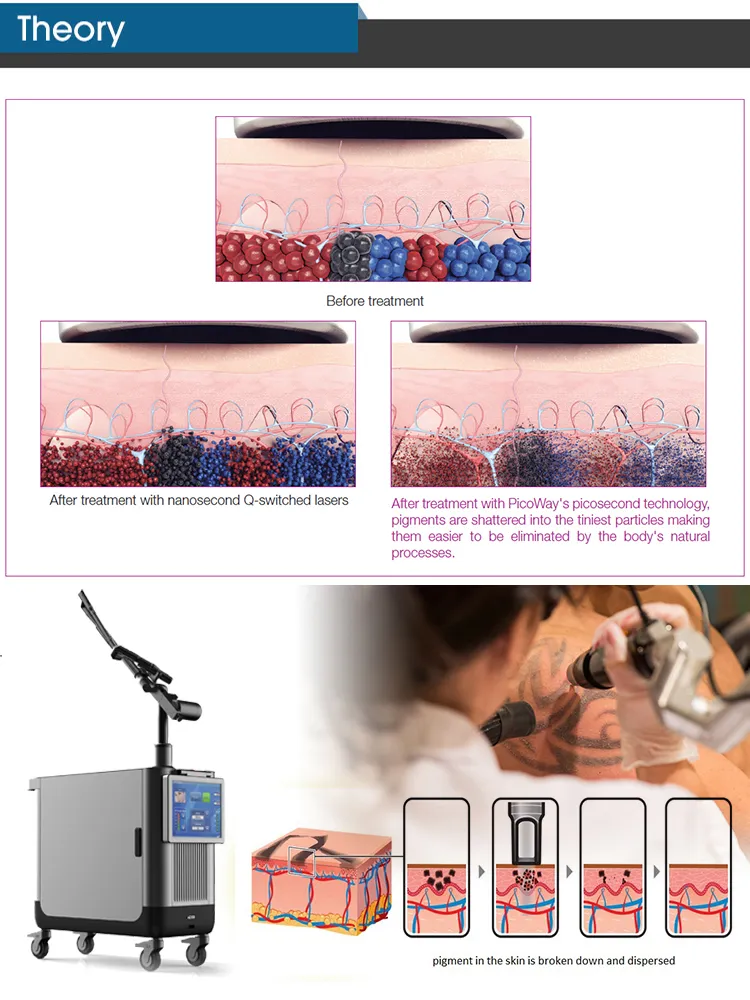
The Picosecond laser represents a breakthrough in pigmented lesion treatment. Utilizing ultra-short pulse outputs, this technology moves beyond traditional thermal effects to leverage light mechanical shock waves. This "shatters" pigment into extremely fine particles that are more easily metabolized by the body.
Treatment Therapy:
By focusing energy to minimize side effects of thermal energy, the Picosecond laser achieves superior whitening and spot removal results compared to traditional laser systems. It is the gold standard for refractory pigmented lesions.
✨
Applications & Benefits
Wide Range Application
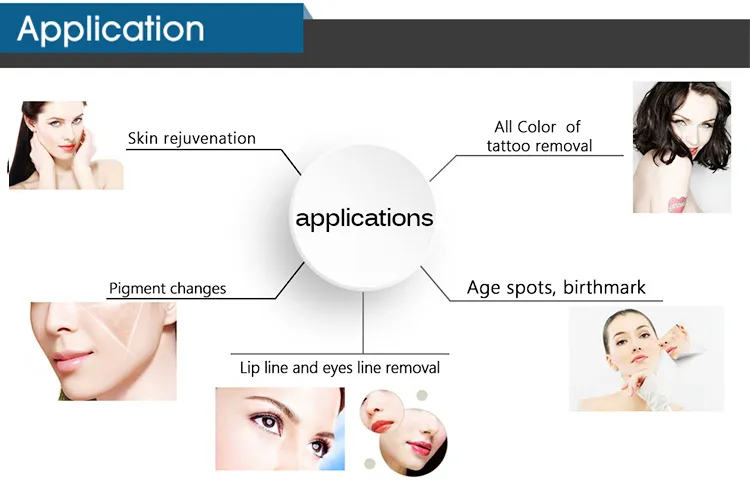
- Chloasma & Sunburn spots
- Freckles & Age spots
- Nevus of Ota
- Acne scars
- Full-color tattoo removal
Key Advantages
- Higher pigment clearance rate
- Faster removal speed
- Reduced risk of melanin reactivation
- Stimulates skin repair mechanisms
- Safe for normal surrounding tissue
📊
Technical Parameters
| Wavelength |
1064nm, 532nm |
| Frequency |
1-10Hz adjustable |
| Laser Output Mode |
Flat top beam |
| Energy |
300-400mJ (1064nm), 150-175mJ (532nm) |
| Pulse Width |
650ps (1064nm), 550ps (532nm) |
| Spot Size |
10mm |
Frequently Asked Questions
What makes Picosecond laser better than traditional lasers?
Picosecond technology uses much shorter pulses (trillionths of a second) to create a mechanical effect that shatters ink and pigment without excessive heat, resulting in faster results and less skin damage.
Can it remove multi-colored tattoos?
Yes, with dual wavelengths (1064nm and 532nm), it is highly effective at removing a wide spectrum of tattoo colors, including dark inks and brighter pigments.
Is the treatment safe for all skin types?
Picosecond lasers are generally safer for a wider range of skin types because the precision of the pulse minimizes thermal damage to the surrounding healthy skin.
How many sessions are typically required?
While it varies depending on the depth and type of pigment, most users see significant results in fewer sessions compared to Q-switch lasers.
What is the recovery time?
There is minimal downtime. Most patients experience slight redness or swelling for a few hours, but can typically return to normal activities immediately.
Does the treatment hurt?
Most patients describe the sensation as a quick snap, but it is generally much better tolerated than older laser technologies.